TBT
Is your effort actually working?
The problem
The scale lies. The data doesn't — when connected.
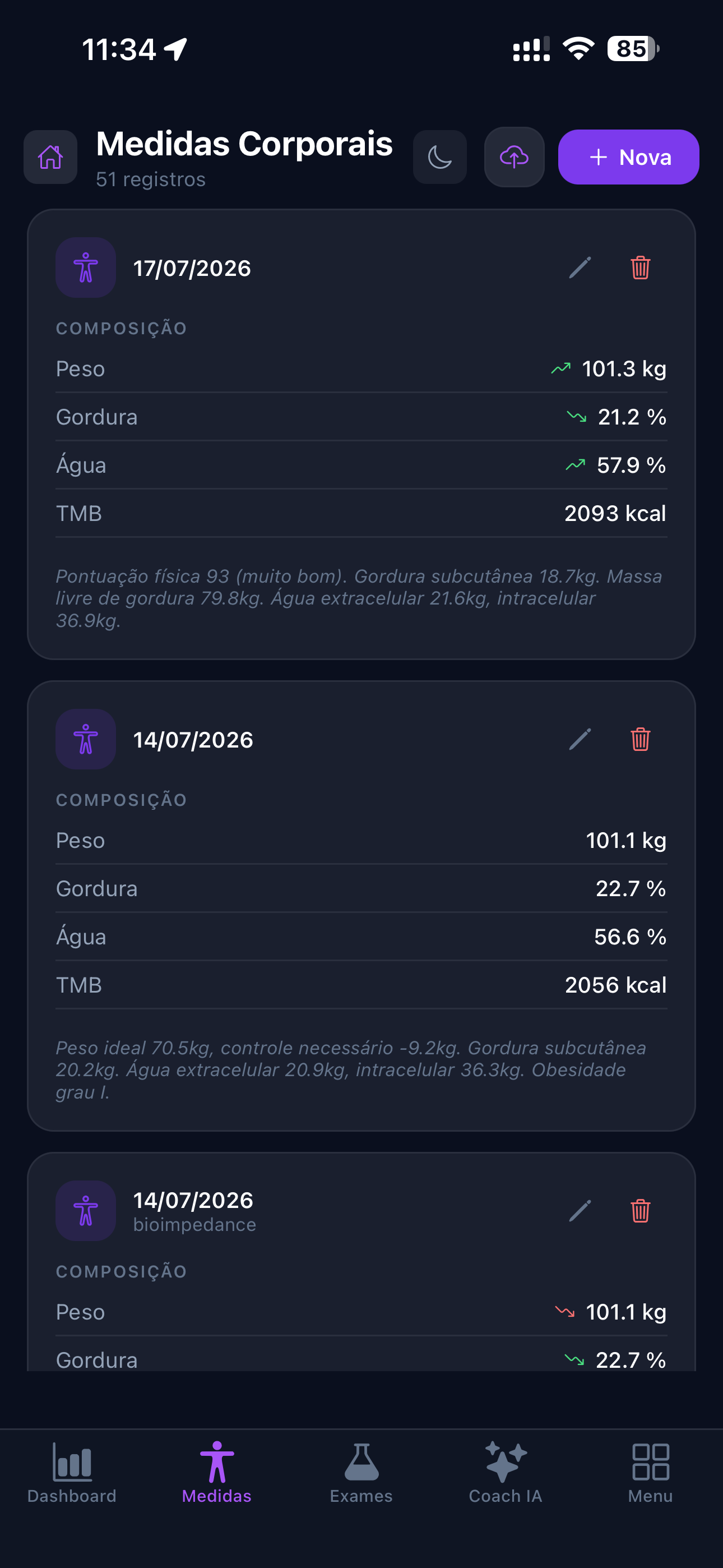
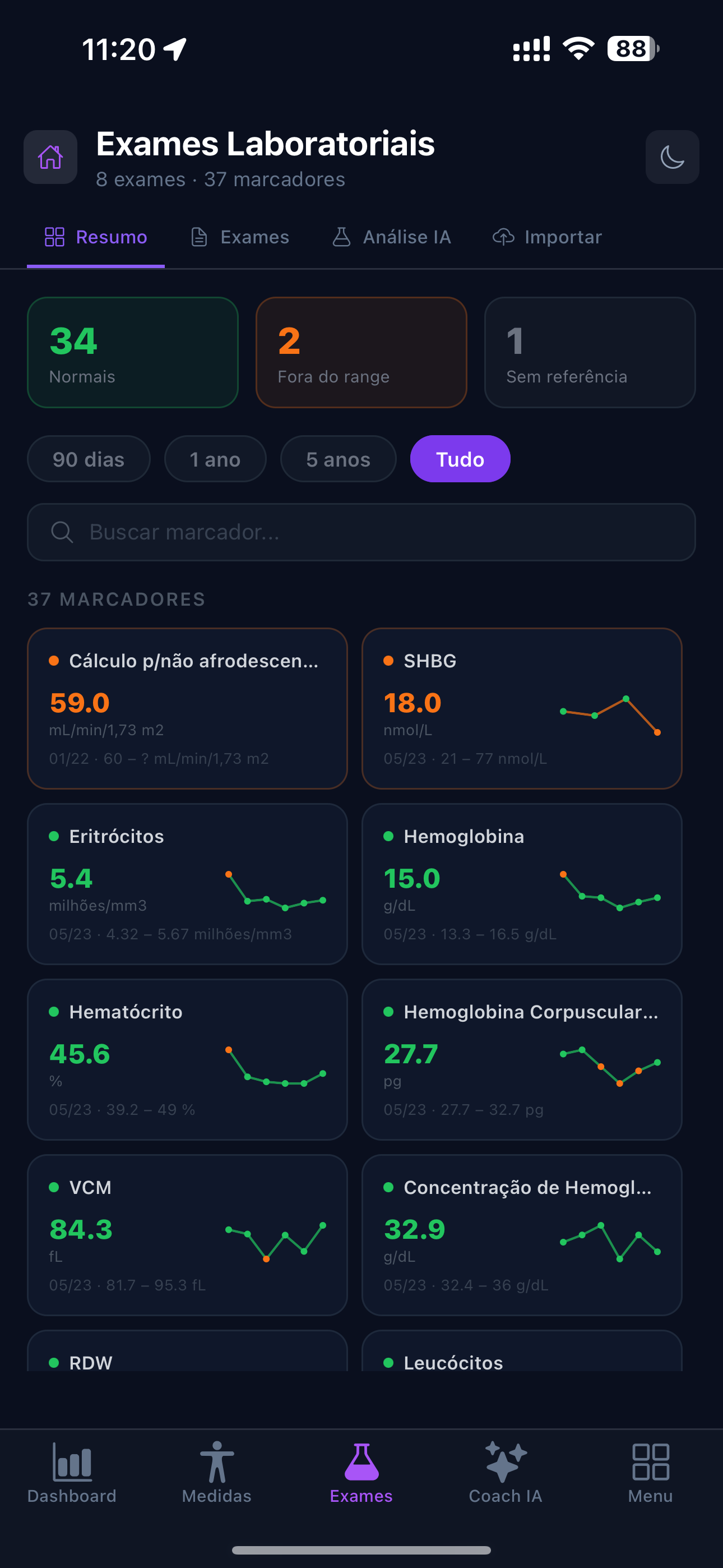
The scale can drop while muscle mass drops along with it. A blood test can improve while sleep, energy and consistency deteriorate. Logged calories don't reveal actual protein intake. Bioimpedance brings numbers that, without context, are just numbers.
The result is a paradox many people live: data in excess, clarity in short supply. The body speaks every day — but the language is fragmented across separate apps, each telling only one piece of the story.
The real pain
Many people don't quit due to lack of willpower
The person works out, trains, controls their diet, tracks the numbers. Yet the doubt persists: am I really making progress? Did I lose muscle along with fat? Is the training helping or hurting recovery? Has my metabolism stalled?
This insecurity erodes confidence in the plan — and can lead to abandoning the journey far sooner than it should. Many people don't quit due to lack of willpower. They quit because they stop trusting the path.
What TBT is
A physical transformation cockpit — not a diet app
TBT stands for Truth Body Tracker. Every word carries weight. Truth: an honest reading, even when data seems contradictory. Body: the focus isn't just weight — it's the body as a system. Tracker: continuous monitoring, with history, trend and comparison over time.
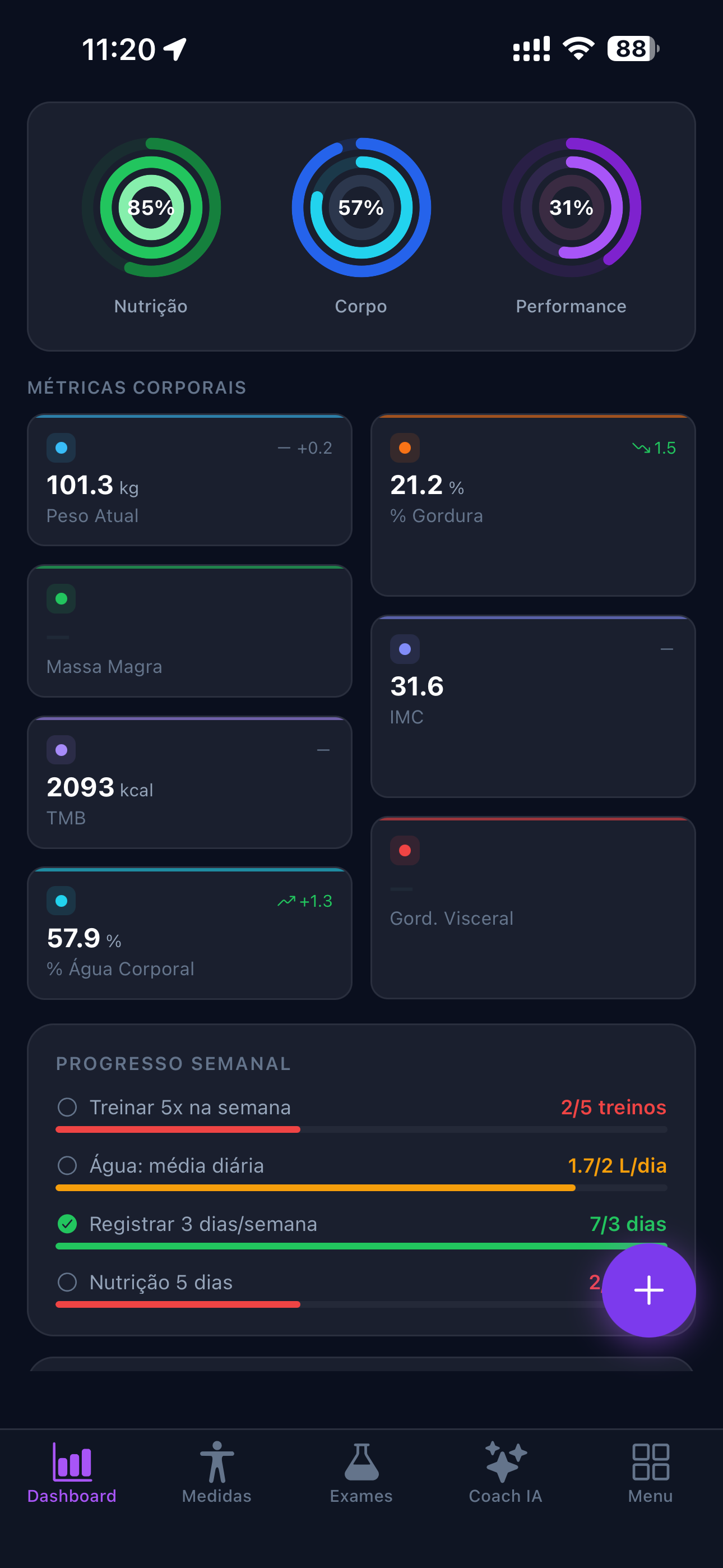
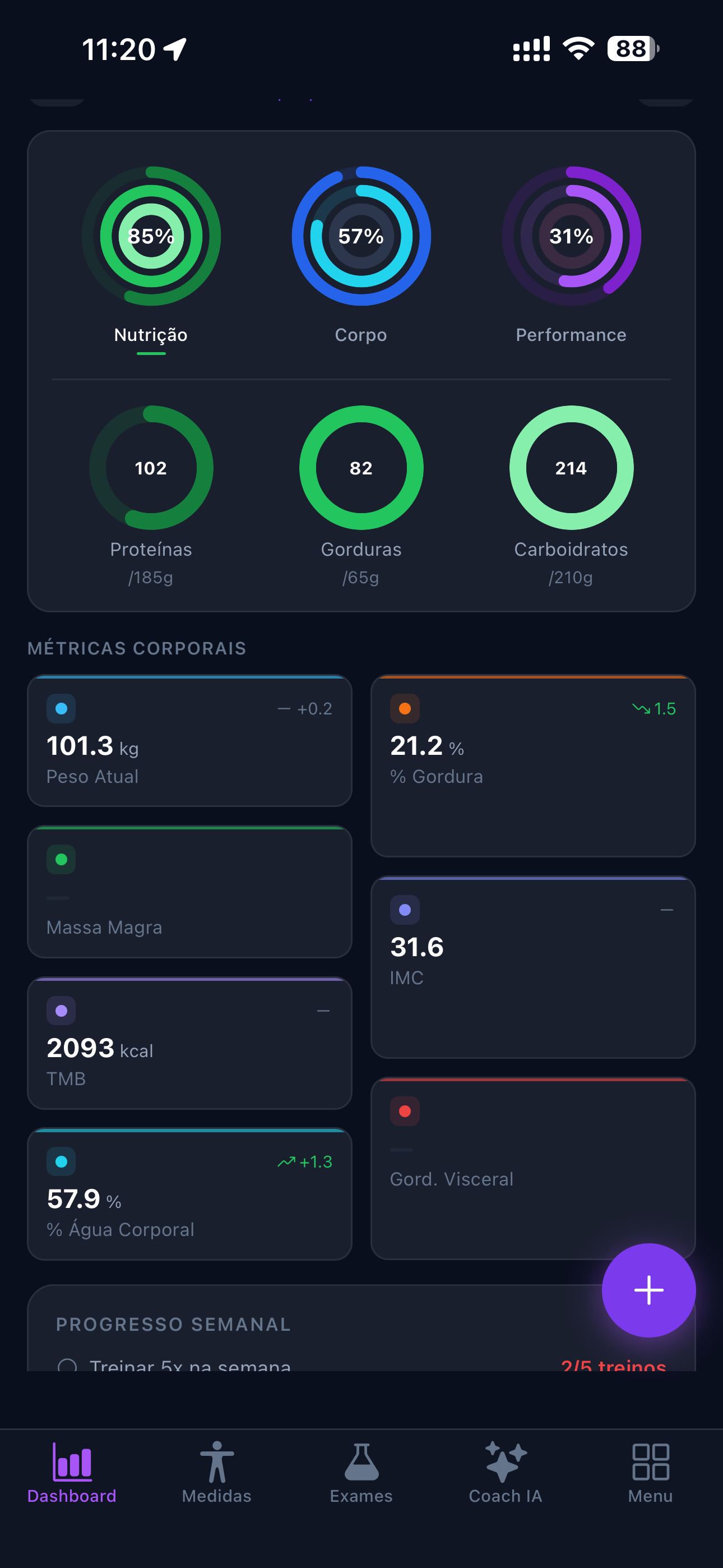
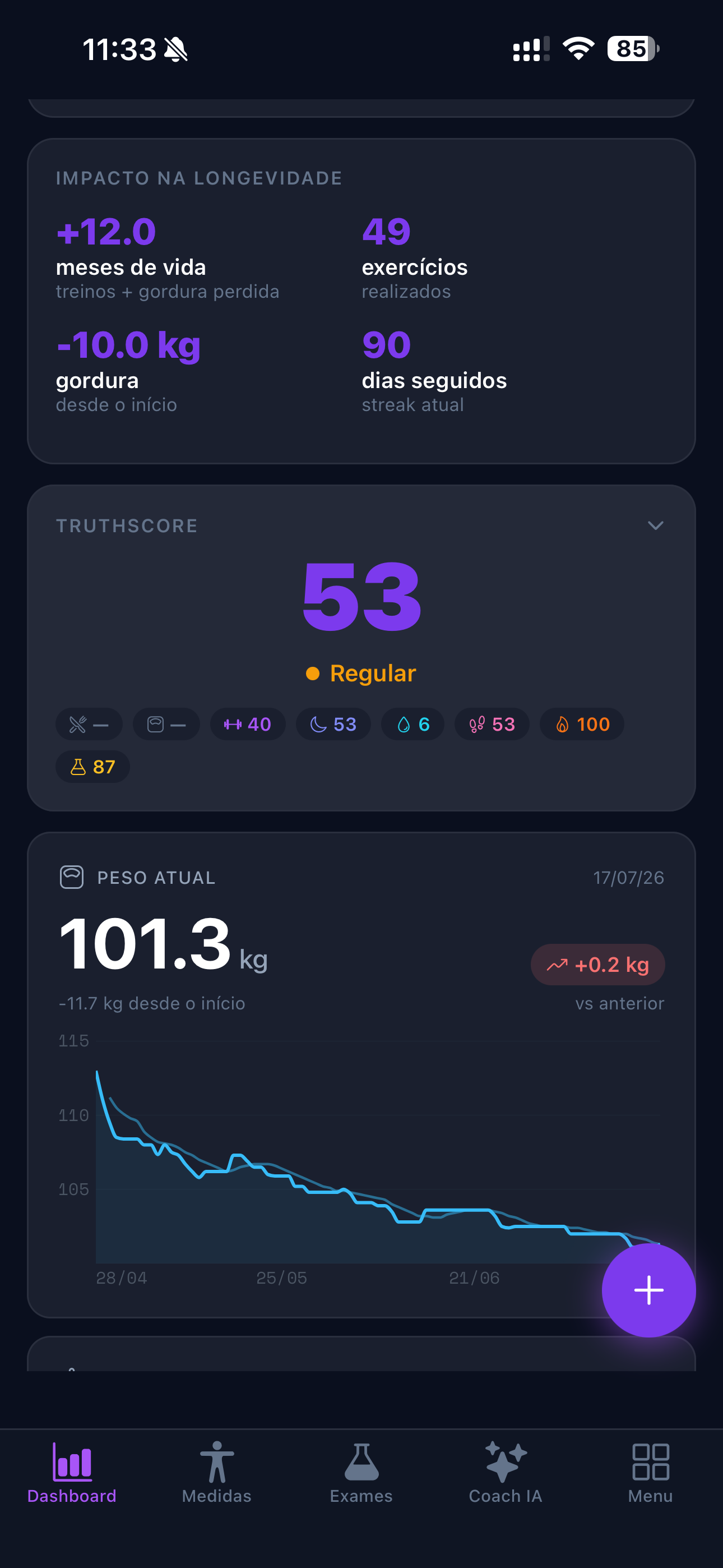
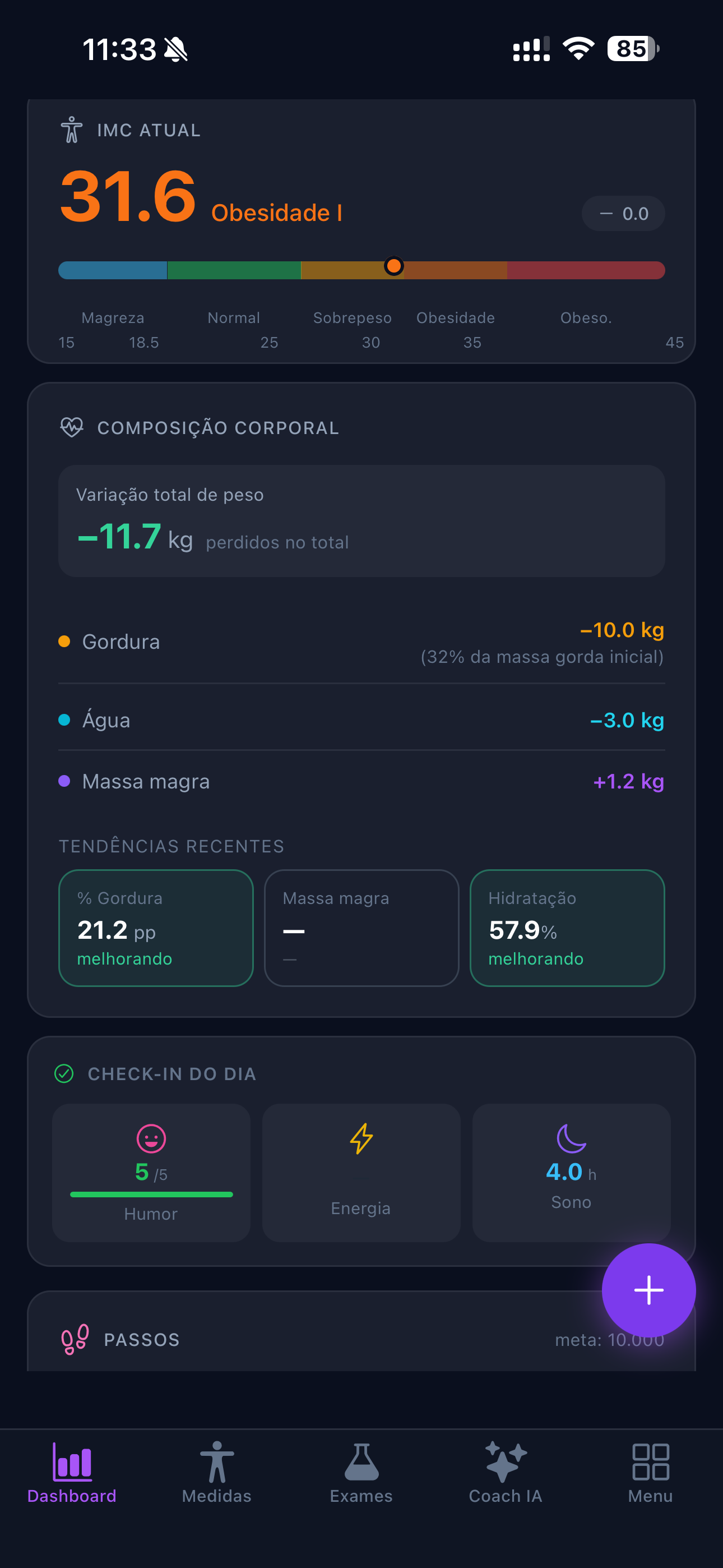
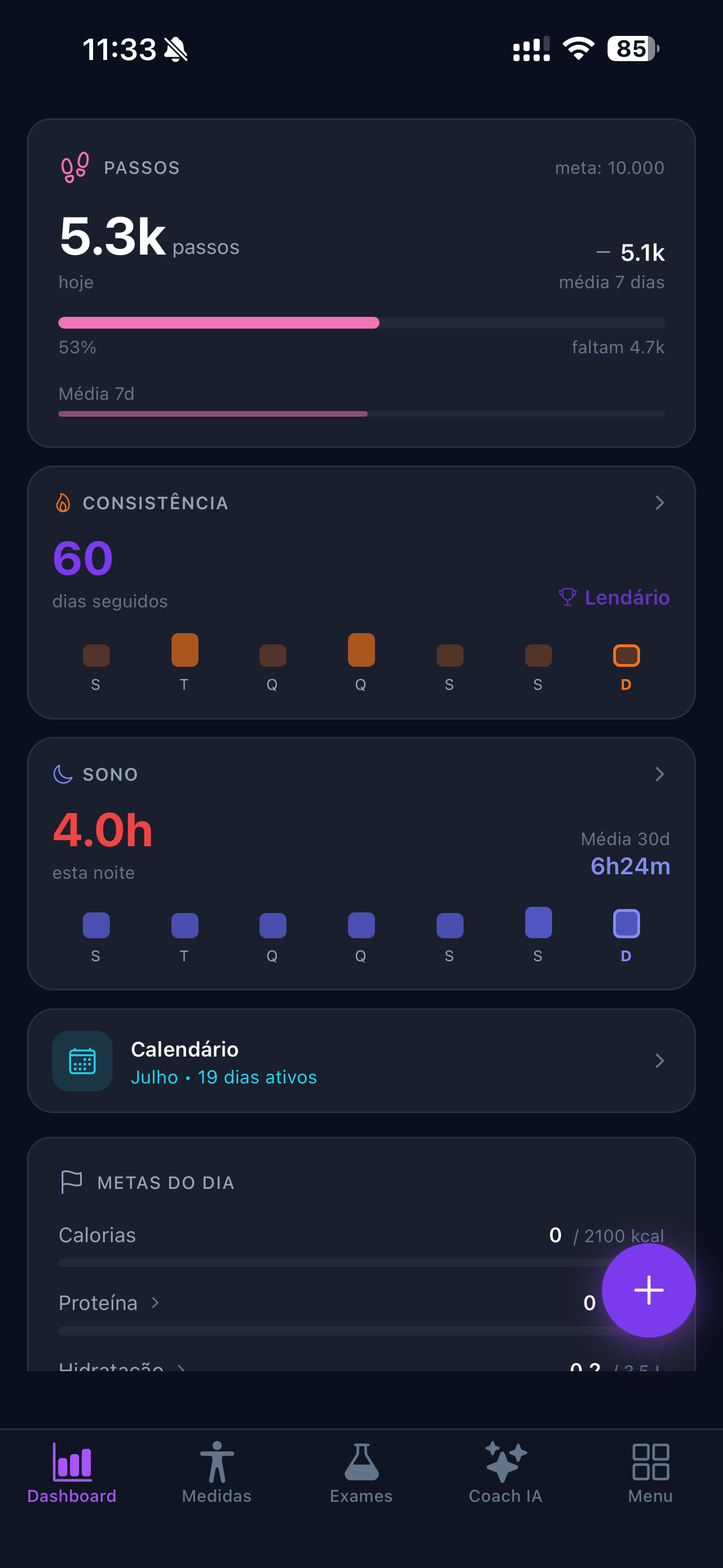
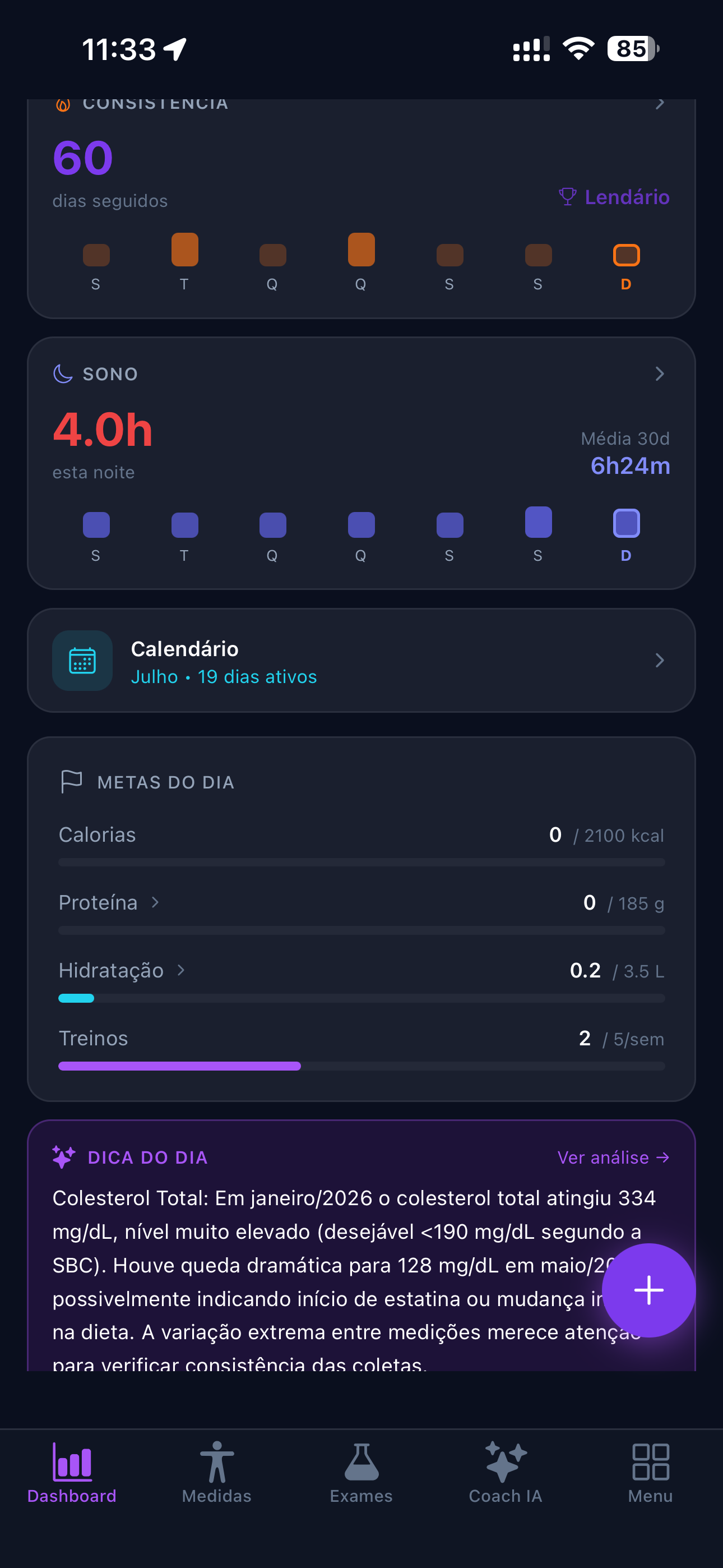
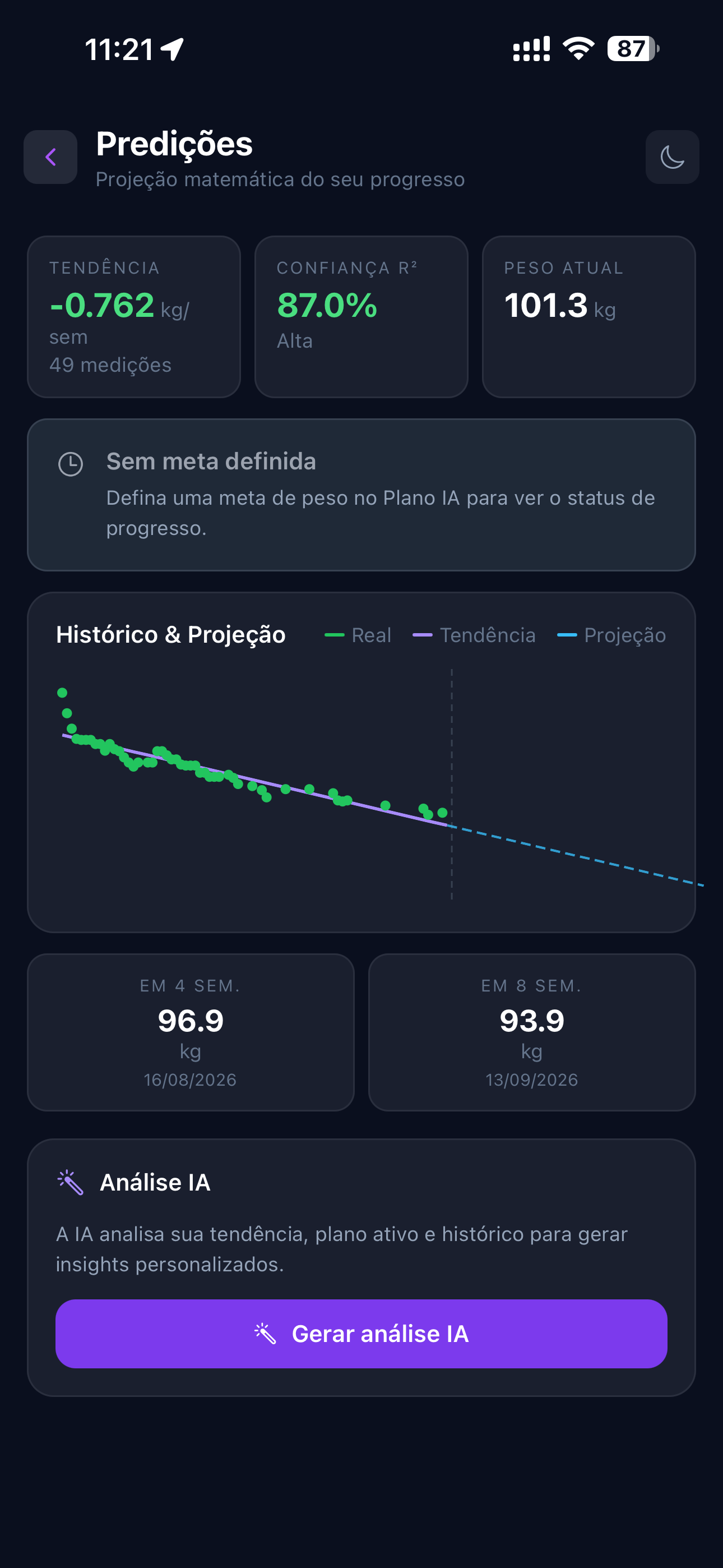
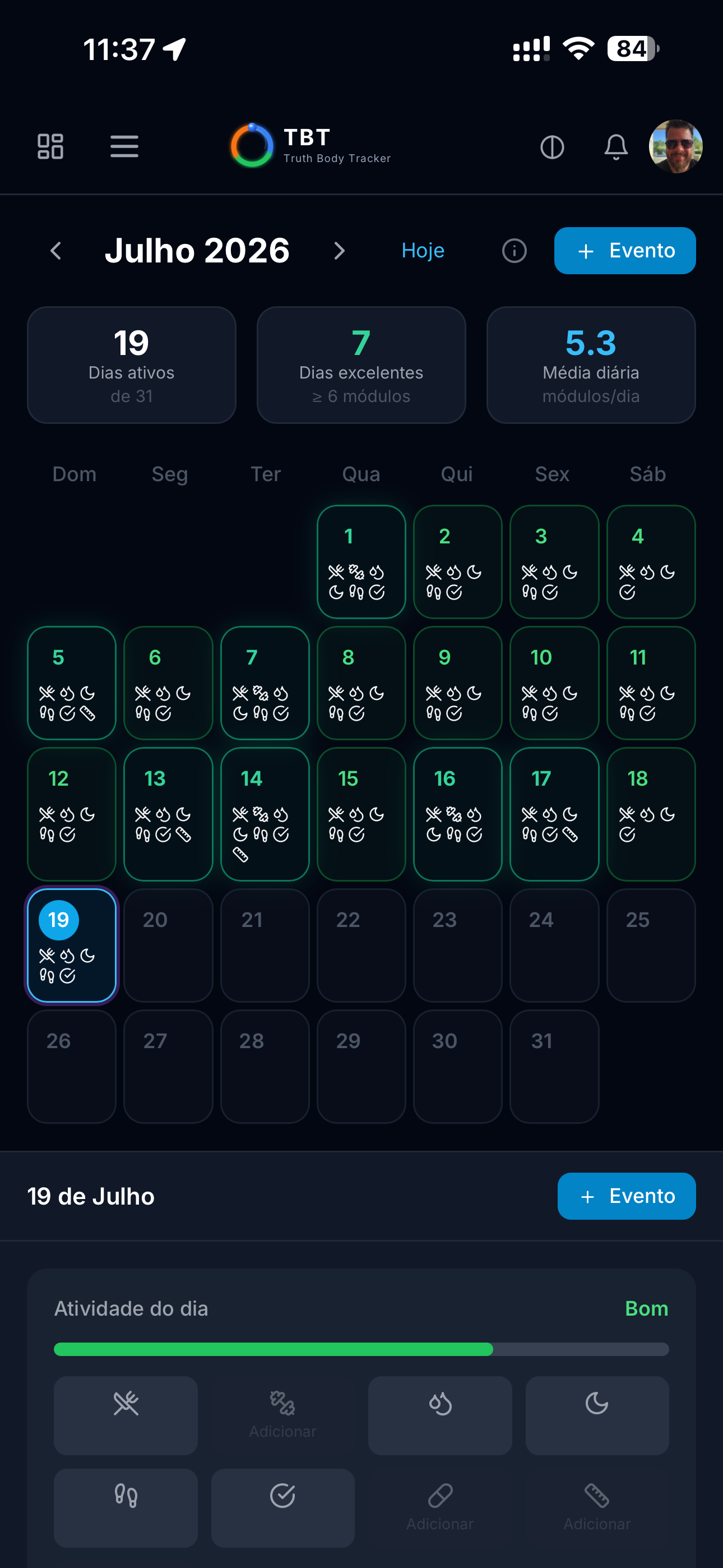
The product works like a physical transformation cockpit. Just as a pilot doesn't make decisions looking at only one instrument, the TBT user doesn't decide based on weight alone. The dashboard brings together macros, calories, hydration, movement, sleep and check-in — simple visuals, analytical depth.
The vision
To take the user out of guesswork
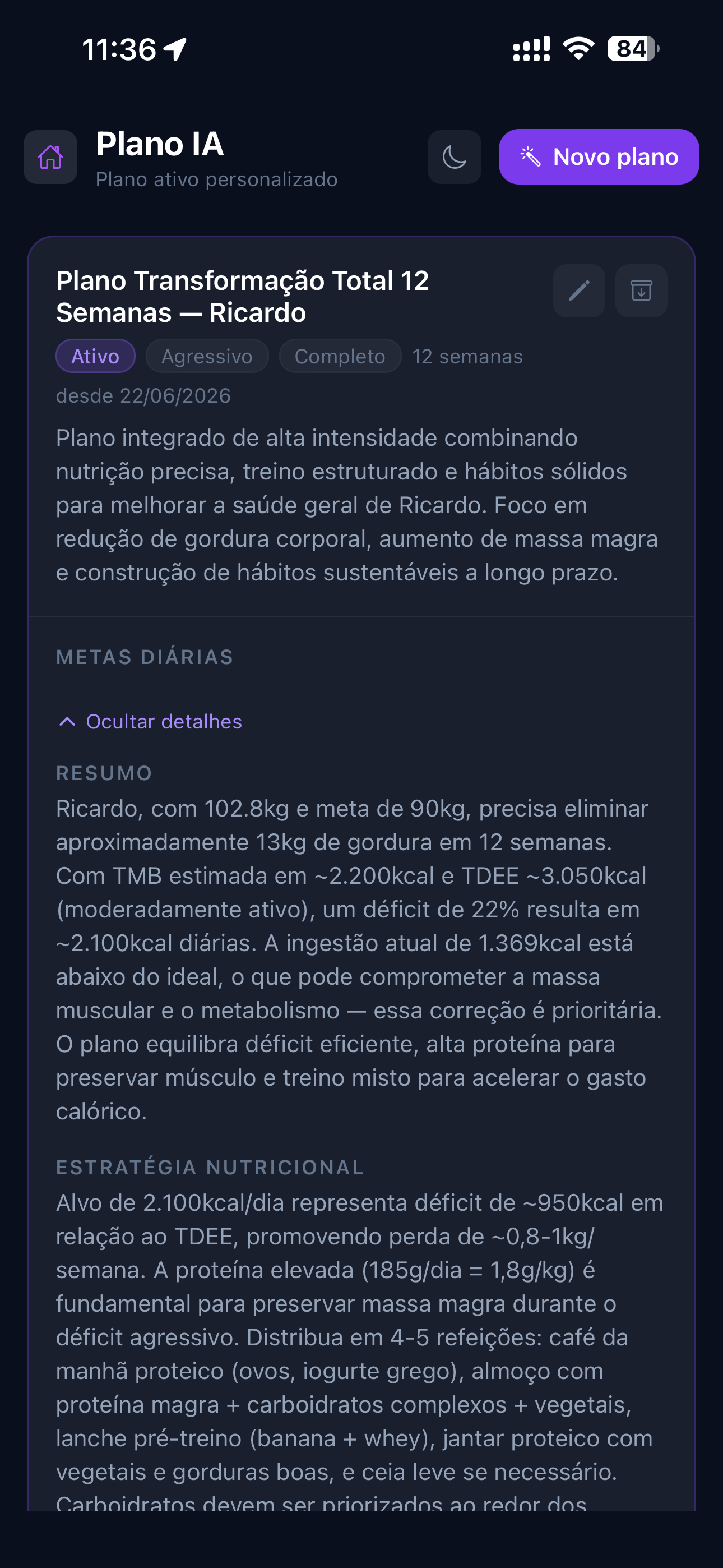
TBT doesn't promise miracles, doesn't diagnose, and doesn't replace health professionals. It promises clarity — about what is happening, what has changed, and what is worth reviewing. To transform effort into learning, and learning into confidence.
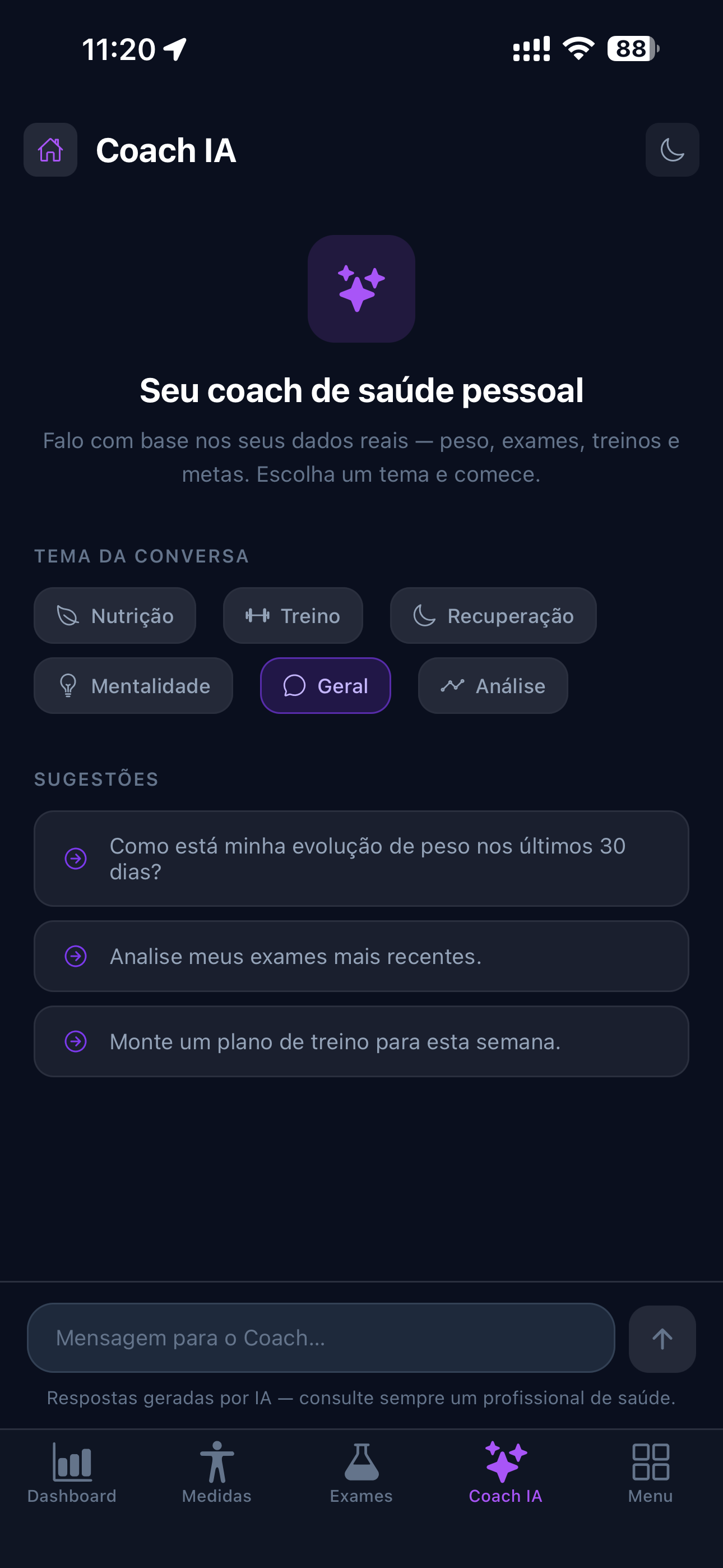
On the horizon: less opinionated and more coherent AI, interpreting patterns from the user's real history — risk of muscle loss, data inconsistency, metabolic improvement. Not prescriptions: informed hypotheses that help the user have better conversations with their health professionals.